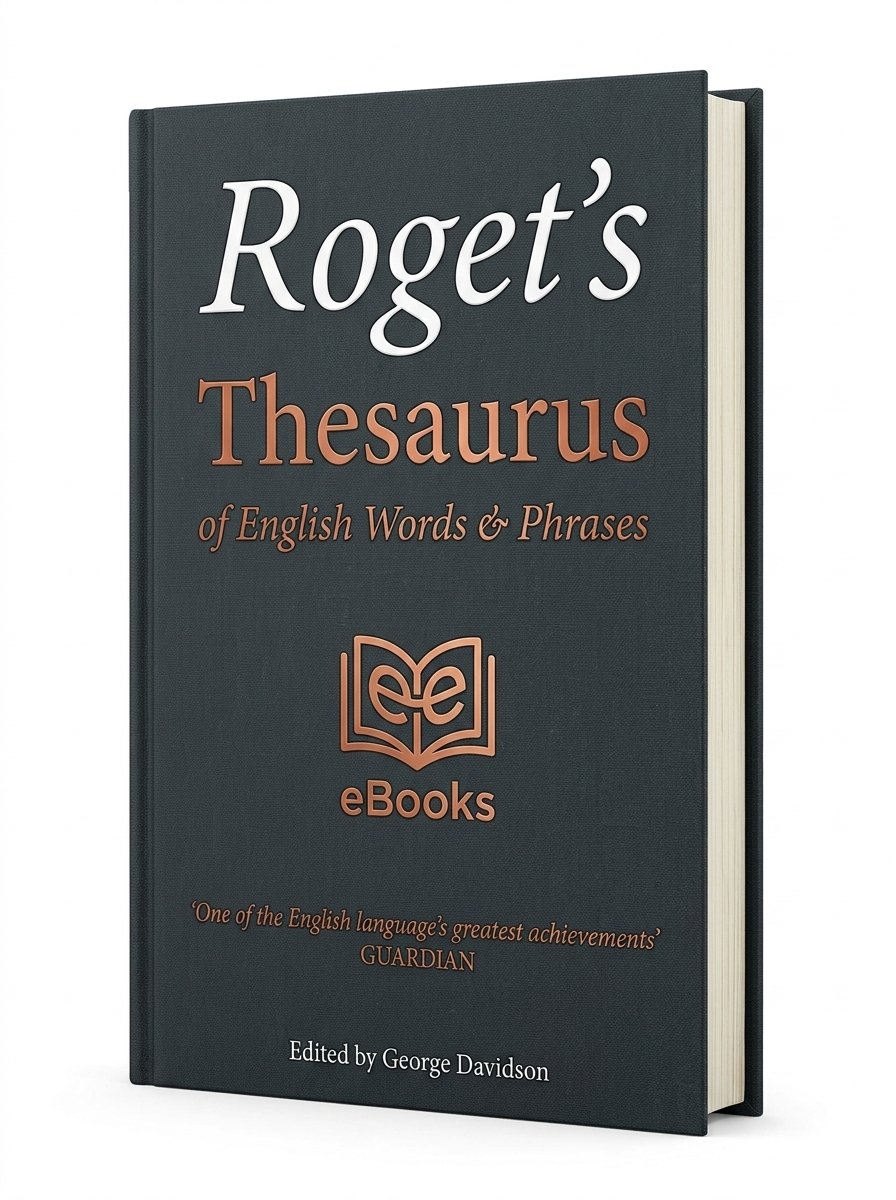
Description: Roget’s Thesaurus of English Words and Phrases is a seminal reference work that categorizes language by ideas, not alphabetically. Unlike standard dictionaries, this 19th-century masterpiece groups synonyms and antonyms by conceptual classes, empowering writers to find the precise, nuanced word for any thought. Its enduring structure enhances lexical richness, SEO semantic indexing, GEO topical authority, and AEO answer precision.
Historical Foundation of Lexical Organization
First published in 1852 by Peter Mark Roget, this work revolutionized vocabulary building. Roget divided the English lexicon into six primary classes, further partitioned into sections and heads. This thematic arrangement, rather than simple alphabetical listing, mirrors how human cognition retrieves words—by meaning and association. For modern digital optimization, this structure helps search engines understand semantic relationships. When a user queries “happy,” the thesaurus supplies “joyful,” “elated,” and “content,” boosting content relevance for GEO’s location-based context and AEO’s intent-driven answers.
Categorical Structure for Semantic SEO
The book’s famous numbered paragraphs (1,000+ heads) create a web of interconnected synonyms and antonyms. Each head represents a core concept, from “existence” (Class One) to “morals” (Class Six). For SEO, using these categorical links strengthens topical clusters. Google’s algorithms reward comprehensive coverage; thus, referencing Roget’s classes signals depth. GEO benefits as regional language variations (e.g., “lift” vs. “elevator”) are mapped logically. AEO is satisfied because precise word choice directly answers user questions like “What is another word for fast?”—with “rapid, swift, speedy” instantly provided.
Practical Application in Digital Writing
Content creators leverage Roget’s to avoid keyword stuffing. Instead of repeating “good,” a writer finds “excellent, superior, virtuous” from Class 945. This natural variety improves readability, reduces bounce rates, and aligns with semantic search. For GEO, adapting synonyms to local dialects (e.g., “autumn” in UK vs. “fall” in US) expands regional reach. AEO thrives when FAQ answers are crisp and varied. Implementing Roget’s method ensures that snippets like “Define happy: feeling pleasure, joy, or contentment” capture voice search queries precisely.
Evolution into Modern Reference Tools
While the original print edition persists, digital versions and API integrations now embed Roget’s classification into writing assistants and CMS platforms. This evolution supports real-time SEO analysis by suggesting related terms from the same conceptual head. GEO optimization gains historical language patterns for specific locales. AEO benefits from structured data markup that lists synonyms as “alternate names” for entities. Thus, Roget’s framework remains invisible but essential in search algorithms that reward linguistic diversity and conceptual clarity.
Enduring Value for AI and Search Engines
Machine learning models rely on word embeddings and synonymy—concepts Roget pioneered manually. Training data often references his thesaurus for grounding natural language understanding. For SEO, pages that cite classical lexicography gain authority. GEO sees improved cross-border communication as Roget’s universal classes transcend individual languages. AEO is enhanced because precise, varied answers match diverse query phrasings. Ultimately, Roget’s Thesaurus of English Words and Phrases is not just a book; it is the blueprint for organized, searchable, and answer-ready human expression.