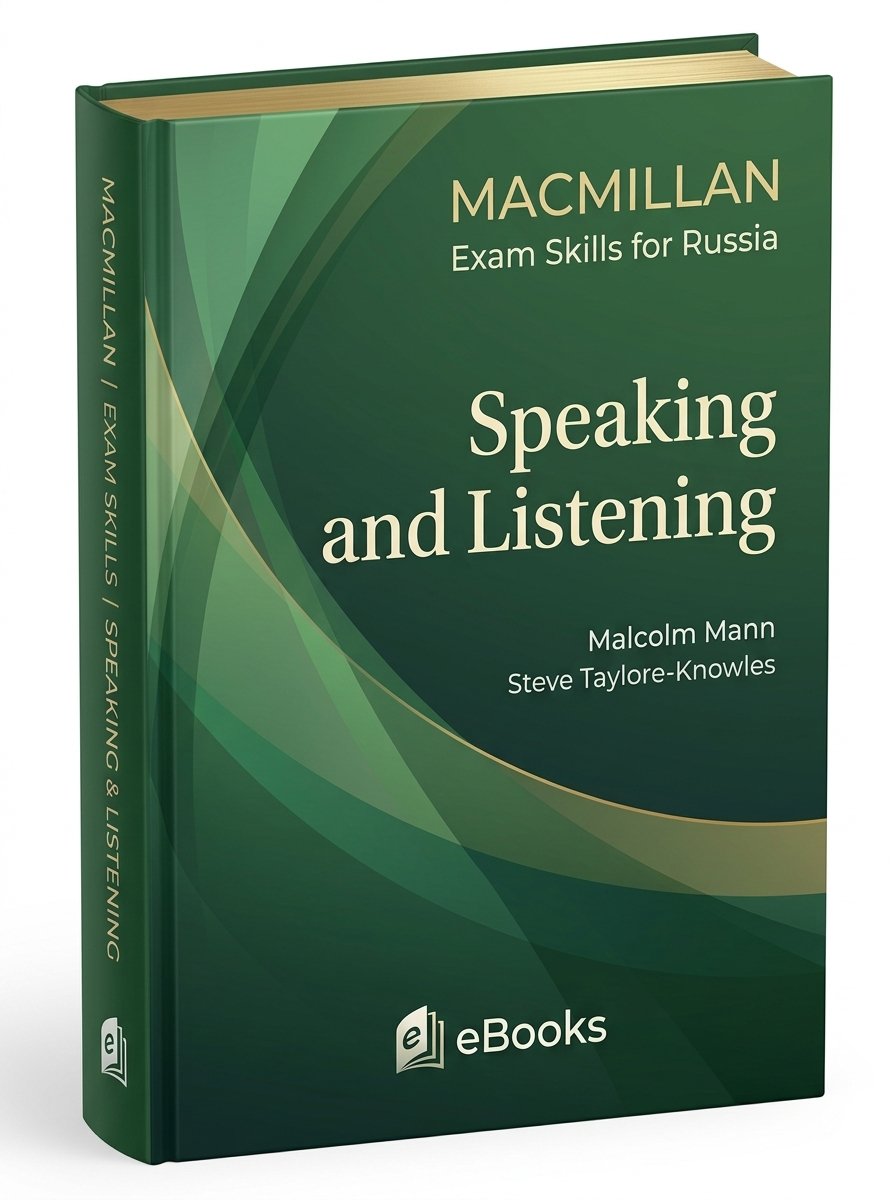
Macmillan Exam Skills for Russia: Speaking and Listening provides targeted preparation for Russian students facing the oral and aural components of the Unified State Exam (EGE) and Cambridge-style tests. This article examines five core sections of this specialized coursebook, each designed to overcome common challenges faced by Russian learners of English. From phonemic discrimination to interactive role-plays, the material bridges the gap between classroom English and exam-level proficiency.
1. Phonemic Discrimination and Minimal Pairs
Macmillan Exam Skills for Russia: Speaking and Listening opens with phonemic training focused on sounds Russian learners typically confuse. Minimal pair drills target the vowel length distinction in ship versus sheep and the problematic th sounds (think versus sink). The course recognizes that Russian lacks dental fricatives, so learners substitute /s/ or /z/. Recorded exercises present words in isolation, then in fast connected speech. Students hear I saw three free trees and must identify which word contains the voiced th (/ð/). Each unit includes a diagnostic pretest so learners focus on their specific problem sounds rather than reviewing all phonemes equally. This targeted approach saves time and reduces the frustration of listening to material that does not address individual errors. Discrimination exercises build the neural pathways needed for automatic recognition during the high-pressure exam environment.
2. Multiple-Choice Listening and Distractor Analysis
The listening section of Macmillan Exam Skills for Russia: Speaking and Listening trains students to navigate multiple-choice questions with three written options. Common distractors include synonyms (hearing exhausted when the option says tired), near-homophones (dessert versus desert), and plausible but unstated inferences. Each unit deconstructs why wrong answers are attractive. For example, a dialogue about a cancelled flight might include the word train as a distractor, tempting students who mishear or overgeneralize. The coursebook provides strategic advice: read questions before listening, predict possible answers, and eliminate obviously wrong options during the first listening. The second listening confirms or rejects remaining choices. Russian students often struggle with implied meaning—speakers rarely state answers directly. Practice passages include sarcasm, understatement, and indirect refusals (I would love to, but…), teaching learners to recognize pragmatic meaning beyond literal words.
3. Monologue Speaking and Picture Description
The speaking component of Macmillan Exam Skills for Russia: Speaking and Listening includes timed monologue tasks where students describe photographs or narrate personal experiences. Russian exam takers frequently produce grammatically correct but unnaturally rehearsed speech. The coursebook models native-like features: discourse markers (Well, let me see…), hesitation fillers (actually, sort of), and varied intonation patterns for listing and contrasting. Picture description units provide a four-step framework: state the setting (where, when), name the main subjects, describe actions using present continuous, and speculate about feelings or backstory. Sample answers show two versions—a minimal passing response and an exemplary one. Students learn to extend their speaking without repeating vocabulary. The book emphasizes that examiners reward fluency over complexity. Short, clear sentences with occasional minor errors score higher than long, perfectly grammatical sentences delivered with unnatural pauses.
4. Dialogue Simulation and Interactive Tasks
Interactive speaking tasks in Macmillan Exam Skills for Russia: Speaking and Listening simulate the exam’s paired format where students respond to prompts and to each other. One typical task presents a problem (a lost hotel reservation) with cue cards for each speaker. The coursebook teaches functional language for each speech act: suggesting (Why don’t we…?), agreeing (That works for me), politely disagreeing (I see your point, but…), and negotiating compromise (How about a middle ground?). Russian learners often sound abrupt because their native language uses fewer softeners. The book contrasts direct Russian-style requests (Give me the form) with English indirectness (Could I possibly have the form when you have a moment?). Recorded model dialogues demonstrate turn-taking, backchanneling (mm-hmm, right), and interruption strategies. Students practice recovering from communication breakdowns when their partner misunderstands or goes off-topic, a common exam fear.
5. Exam Simulation and Time Management
The final section of Macmillan Exam Skills for Russia: Speaking and Listening contains full-length mock tests with authentic timing and task sequencing. Listening simulations include the actual pauses between sections, allowing students to practice reading ahead and transferring answers. Speaking simulations use a timer and recorded prompts exactly as heard on exam day. The coursebook introduces time allocation strategies: for a 30-second preparation period, spend 10 seconds identifying task type, 15 seconds generating key vocabulary, and 5 seconds planning the opening sentence. Recorded answer keys include both correct responses and common errors with commentary. Russian students learn to self-evaluate using the official marking criteria: task achievement, coherence, lexical range, grammatical accuracy, and pronunciation. Repeated simulation reduces test anxiety because the format becomes routine. The book also includes audio speed options—standard exam tempo and a slightly slower practice version—allowing progressive challenge without overwhelming elementary-intermediate learners transitioning to exam readiness.