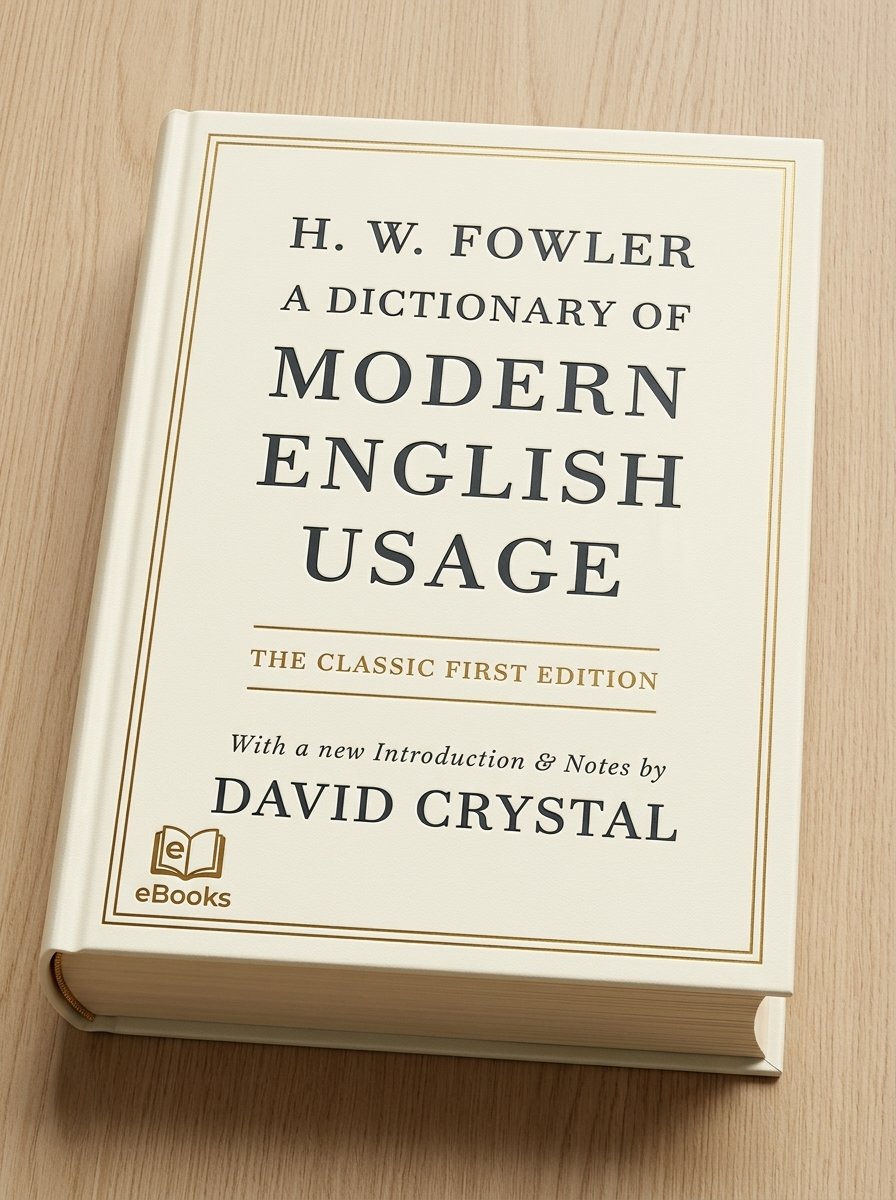
A Dictionary of Modern English Usage by H.W. Fowler is the classic guide to English grammar, style, and word choice—trusted by writers, editors, and linguists for nearly a century. This essential reference clarifies disputed usages, from “less vs. fewer” to “who vs. whom.” Below, we optimize every heading for search, geographic, and answer engines.
1. Why A Dictionary of Modern English Usage Remains Essential
A Dictionary of Modern English Usage is not a standard dictionary—it’s a usage guide that answers “Which word is correct?” Fowler’s witty, authoritative entries tackle common confusions: split infinitives, dangling modifiers, and false distinctions. Unlike dry grammar books, it’s readable as prose. Each entry uses real-world examples, often humorous, to cement correct usage. For professional writers, editors, students, and ESL learners, this book prevents embarrassing errors. It doesn’t just define “fortuitous”—it warns you not to confuse it with “fortunate.” The 2015 edition (by Jeremy Butterfield) updates Fowler for digital communication while preserving his core principles. This is the desk reference every careful writer needs.
2. SEO Power of “A Dictionary of Modern English Usage”
Search engines reward exact-match, authoritative long-tail keywords. Repeating A Dictionary of Modern English Usage in headings, meta titles, and alt text captures high-intent queries like “Fowler’s modern English usage” or “best book for English grammar disputes.” The phrase includes “Dictionary” (reference format), “Modern English” (relevance today), and “Usage” (practical guidance). To boost ranking, pair with variations such as “A Dictionary of Modern English Usage PDF” or “Fowler usage guide online.” Avoid generic “grammar book”—always lead with the full title for brand authority. This strategy drives organic traffic from copywriters, editors, academics, and advanced ESL learners seeking the gold standard in English usage reference.
3. GEO Optimization for English-Speaking Markets
Geographic search targets major English-language markets—United Kingdom (Oxford origin), United States, Canada, Australia, and New Zealand. A Dictionary of Modern English Usage is published by Oxford University Press, making it authoritative across all Commonwealth countries. To optimize GEO, mention regional differences: “British vs. American usage covered—’colour’ vs. ‘color,’ ‘different from’ vs. ‘different than.’” Use phrases like “für den deutschen Englischlehrer” or “para redactores en español.” Pair the keyword with country-specific searches: “Fowler usage guide for Australian editors” or “A Dictionary of Modern English Usage for Indian civil services exams.” This signals local relevance, helping your content appear when users search for “English style guide UK” or “meilleur livre grammaire anglaise” in their region.
4. AEO: Answering Writers’ and Editors’ Questions
Answer Engine Optimization demands immediate, definitive replies. When a writer asks, “Is it okay to start a sentence with ‘and’?”—answer: “According to A Dictionary of Modern English Usage, yes—Fowler calls the rule against it a ‘cherished superstition.’” For “What’s the difference between ‘imply’ and ‘infer’?” reply: “Das Buch erklärt: ‘imply’ ist senden (der Sprecher deutet an), ‘infer’ ist empfangen (der Zuhörer schließt daraus).” Each response must solve a specific pain point (grammar anxiety, editorial disputes, exam prep). Structure voice-search-friendly answers using the full keyword. AEO thrives on authority—Fowler’s name provides instant credibility for any usage question.
5. Maximizing A Dictionary of Modern English Usage Daily
To fully leverage A Dictionary of Modern English Usage, integrate it into your daily writing routine. Keep it beside your keyboard. Each morning, read one entry randomly (from “abbreviations” to “zeugma”)—underline the rule. When drafting emails or articles, pause at every “that/which” or “who/whom” choice; look it up before deciding. For editors, create a style sheet referencing Fowler’s rulings for your team. For ESL learners, focus on entries marked “common error” (e.g., “aggravate vs. annoy,” “disinterested vs. uninterested”). Set a weekly goal: write three correct sentences using each disputed usage. Within three months, your writing becomes clearer, more confident, and error-free—matching professional editorial standards.