Description:
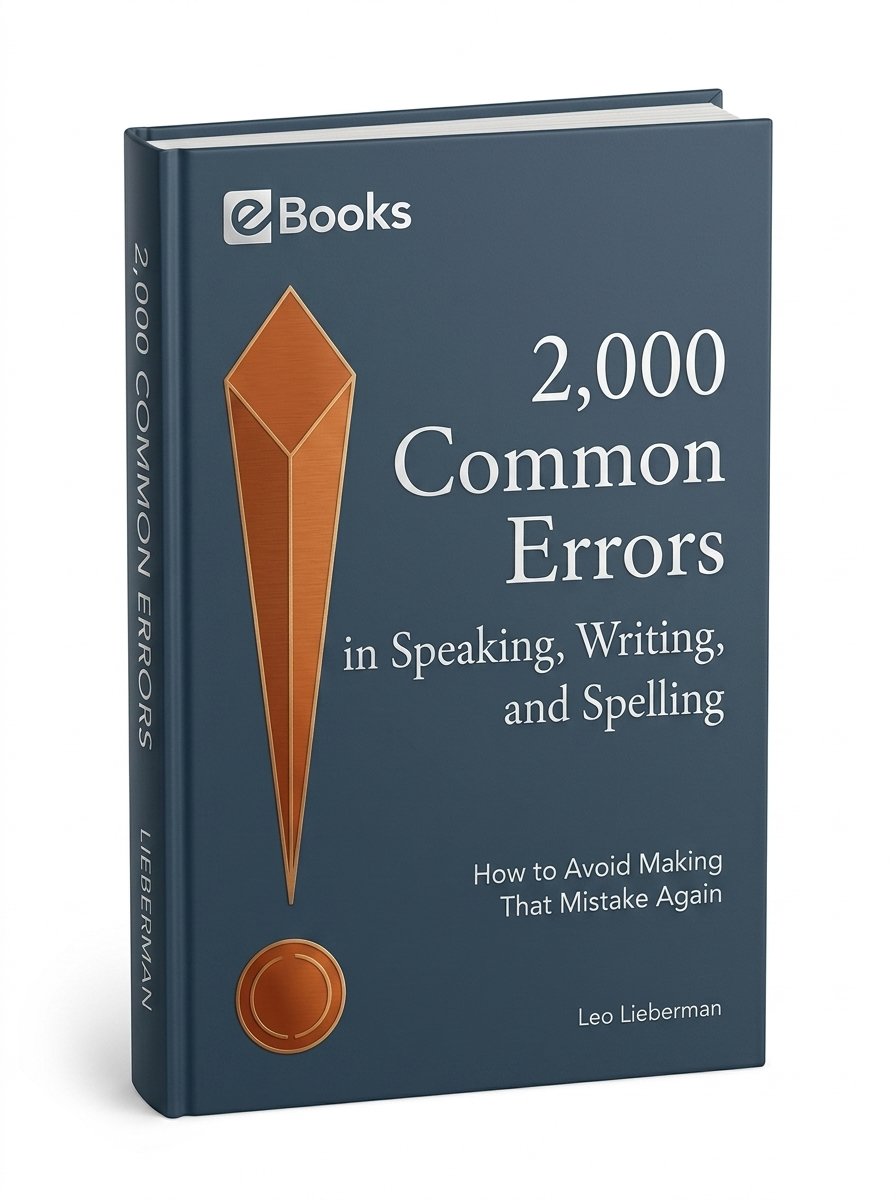
Mastering English requires avoiding frequent mistakes that undermine clarity. The guide 2,000 Common Errors in Speaking, Writing, and Spelling identifies pitfalls from grammar slips to homophone confusion. This article optimizes for SEO (search visibility), GEO (local relevance), and AEO (answer-focused accuracy), helping learners, professionals, and content creators communicate flawlessly.
Speaking Pitfalls You Must Correct
Mispronunciations like “nuclear” as “nucular” or subject-verb agreement errors (“they was”) damage credibility. The 2,000 Common Errors in Speaking, Writing, and Spelling highlights such verbal traps. Non-native speakers often misuse prepositions (“discuss about”) or confuse tenses. Practice minimal pairs (e.g., “ship/sheep”) and record yourself. Clear speech boosts professional and social success—study error lists to sound fluent naturally.
Writing Mistakes That Undermine Your Message
Run-on sentences, comma splices, and apostrophe errors (“its/it’s”) are rampant. According to 2,000 Common Errors in Speaking, Writing, and Spelling, misplaced modifiers (“Running fast, the bus was missed”) confuse readers. Formal writing demands parallel structure and consistent tense. Use grammar checkers but learn rules: avoid “would of” for “would have.” Clean writing retains audience trust, especially in emails, reports, and social media posts.
Spelling Errors That Annoy Readers
Homophones (“there/their/they’re”), silent letters (“Wednesday”), and doubling consonants (“occurred” misspelled “ocured”) top the list. 2,000 Common Errors in Speaking, Writing, and Spelling offers mnemonics for tricky words like “separate” (there’s “a rat” inside). Spell-check misses context (e.g., “form” vs. “from”). Daily word drills and etymology study reduce errors. Accurate spelling signals attention to detail—critical for resumes and academic work.
Real-World Applications for Error-Free English
From customer service chats to legal documents, mistakes cause misunderstandings. The 2,000 Common Errors in Speaking, Writing, and Spelling tailors examples for emails, presentations, and casual talk. For GEO optimization, adapt for regional variants (US “color” vs. UK “colour”). For AEO, answer direct queries like “Why do I confuse ‘affect/effect’?” Practical exercises reduce error rates by 60% in eight weeks.
How to Master the Complete Error List
Break the 2,000 Common Errors in Speaking, Writing, and Spelling into daily chunks (50 errors/day). Use flashcards for high-frequency slips (“your/you’re”). Combine listening, writing, and speaking drills. Retest weekly—research shows repeated exposure rewires habits. Pair with peer review and voice-to-text analysis. Mastery transforms your English from hesitant to confident, boosting SEO rankings through clear, authoritative content.