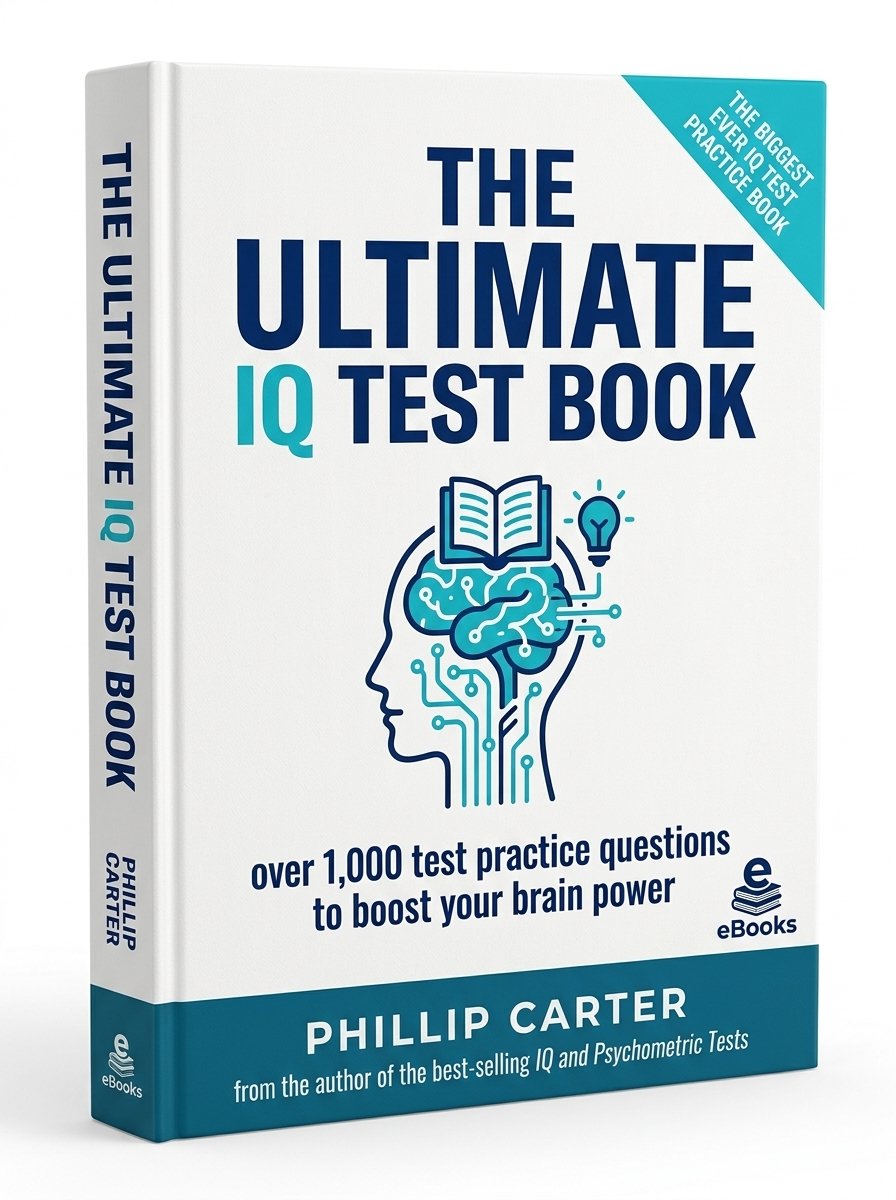
The Ultimate IQ Test Book: 1,000 Practice Test Questions to Boost Your Brain Power meets A Course Book in English Grammar: Standard English and the Dialects at the intersection of cognitive training and linguistic precision. Together, they sharpen analytical reasoning while grounding it in real-world language structures. Below, five focused headings explore this synergy.
1. Verbal Reasoning and Standard Grammar Rules
The Ultimate IQ Test Book: 1,000 Practice Test Questions to Boost Your Brain Power includes analogies, synonym/antonym pairs, and sentence completion tasks. Success depends on recognizing standard English conventions—subject-verb agreement, parallel structure, and logical connectors. A Course Book in English Grammar: Standard English and the Dialects provides the explicit rule system behind those answers. For example, an IQ question requiring “neither…nor” pairing becomes intuitive when you understand correlative conjunctions. Learners who study both resources move from guessing to grammatical certainty, raising verbal IQ scores faster.
2. Error Detection Across Dialectal Forms
IQ tests often include “find the grammatical mistake” items. Standard English errors are obvious to trained eyes, but The Ultimate IQ Test Book may also present dialectal constructions (“He don’t know”) as distractors. Without dialect awareness, test-takers mislabel systematic variation as error. A Course Book in English Grammar: Standard English and the Dialects trains users to distinguish true mistakes (subject-verb disagreement in standard register) from legitimate dialectal features. This critical filtering improves accuracy on verbal subtests and prevents overcorrection—a common IQ test pitfall for multilingual and multidialectal individuals.
3. Pattern Recognition in Morphology and Syntax
IQ tests measure pattern completion using letter series, word codes, and sequence logic. The Ultimate IQ Test Book offers 1,000 such puzzles. A Course Book in English Grammar adds linguistic depth: recognizing how past tense forms follow patterns (walk-walked) or irregular shifts (sing-sang-sung). Advanced exercises combine both—for instance, predicting the next word in a sequence based on derivational morpheme rules (“act, actor, action, ?” → “active”). This dual training strengthens fluid intelligence while building explicit grammatical knowledge, making abstract patterns feel concrete and memorable.
4. Working Memory and Sentence Processing
IQ test performance correlates with working memory capacity. The Ultimate IQ Test Book includes digit span, reverse ordering, and sentence repetition tasks. A Course Book in English Grammar enhances these through embedded clause analysis. Learners parse complex standard sentences (“The book that the teacher whom the principal hired recommended was dense”) while comparing dialectal simplifications (“The teacher the principal hired recommended a dense book”). Practicing both reduces cognitive load, freeing mental resources for faster test completion. This grammar-informed memory training outperforms generic brain games for verbal IQ gains.
5. Logical Deduction from Grammatical Clues
Finally, advanced IQ questions require deducing rules from incomplete data—e.g., “If ‘He go home’ is dialectal and ‘He goes home’ is standard, what is the rule?” The Ultimate IQ Test Book provides scenarios; A Course Book in English Grammar supplies the analytic framework: third-person singular -s marking, zero copula, habitual aspect. Learners apply grammatical deduction to novel test items, treating each question as a miniature linguistic field study. This method builds transferable reasoning skills beyond IQ testing—into legal argumentation, coding logic, and scientific hypothesis testing.