Description: Mastering Common Mistakes in English is essential for clear communication. This guide highlights frequent errors in grammar, vocabulary, and syntax, helping learners and professionals refine their language skills. Below, we break down five critical areas to watch for in writing and speech.
Subject-Verb Agreement Errors
One of the most persistent Common Mistakes in English involves subject-verb agreement. Singular subjects require singular verbs, and plural subjects need plural verbs. For example, saying “She go to school” instead of “She goes” disrupts sentence flow. Intervening phrases like “as well as” or “together with” do not change the subject’s number. “The box of chocolates is empty” (not “are empty”). Always identify the main subject before choosing the verb. Practicing with compound subjects and indefinite pronouns (everyone, each) reduces these errors significantly.
Misplaced and Dangling Modifiers
Modifiers add detail but cause confusion when placed incorrectly. A classic Common Mistakes in English is saying “Running for the bus, the backpack fell,” which implies the backpack ran. Place modifiers directly next to the word they describe. “Running for the bus, I dropped my backpack” fixes the error. Misplaced modifiers like “He nearly drove the car for six hours” (he didn’t nearly drive; he drove nearly six hours) alter meaning. Review sentences to ensure descriptive phrases clearly connect to the right noun.
Incorrect Preposition Usage
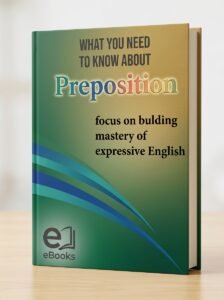
Prepositions (in, on, at, for) are tricky because they don’t translate directly across languages. Another frequent Common Mistakes in English is using “discuss about” instead of “discuss,” or “depend of” instead of “depend on.” Time expressions cause issues too: “on Monday” but “in the morning.” Memorize common collocations like “interested in,” “good at,” and “wait for.” Reading authentic materials and noting preposition-noun pairs builds natural accuracy over time.
Confusing Word Pairs
Words like “their/there/they’re,” “your/you’re,” and “lose/loose” are routinely swapped. This Common Mistakes in English changes meaning and reduces professionalism. “Its” (possessive) versus “it’s” (it is) is another top error. Use mnemonic tricks: “Lose” lost an ‘o’ (like missing something); “loose” has extra ‘o’ (like loose button). Spell-check ignores context, so proofread manually. Create a personal list of your frequent confusions and review it before finalizing any written work.
Double Negatives and Redundancies
Using two negatives in one clause (“I don’t have nothing”) creates a positive meaning, confusing readers. Avoid this Common Mistakes in English by sticking to a single negative: “I don’t have anything.” Redundancies like “repeat again,” “return back,” or “actual fact” add unnecessary words. Say “repeat,” “return,” and “in fact.” Streamlining your language improves clarity and conciseness. Read sentences aloud—if a word doesn’t add new meaning, remove it. Mastering these corrections elevates everyday English from passable to polished.