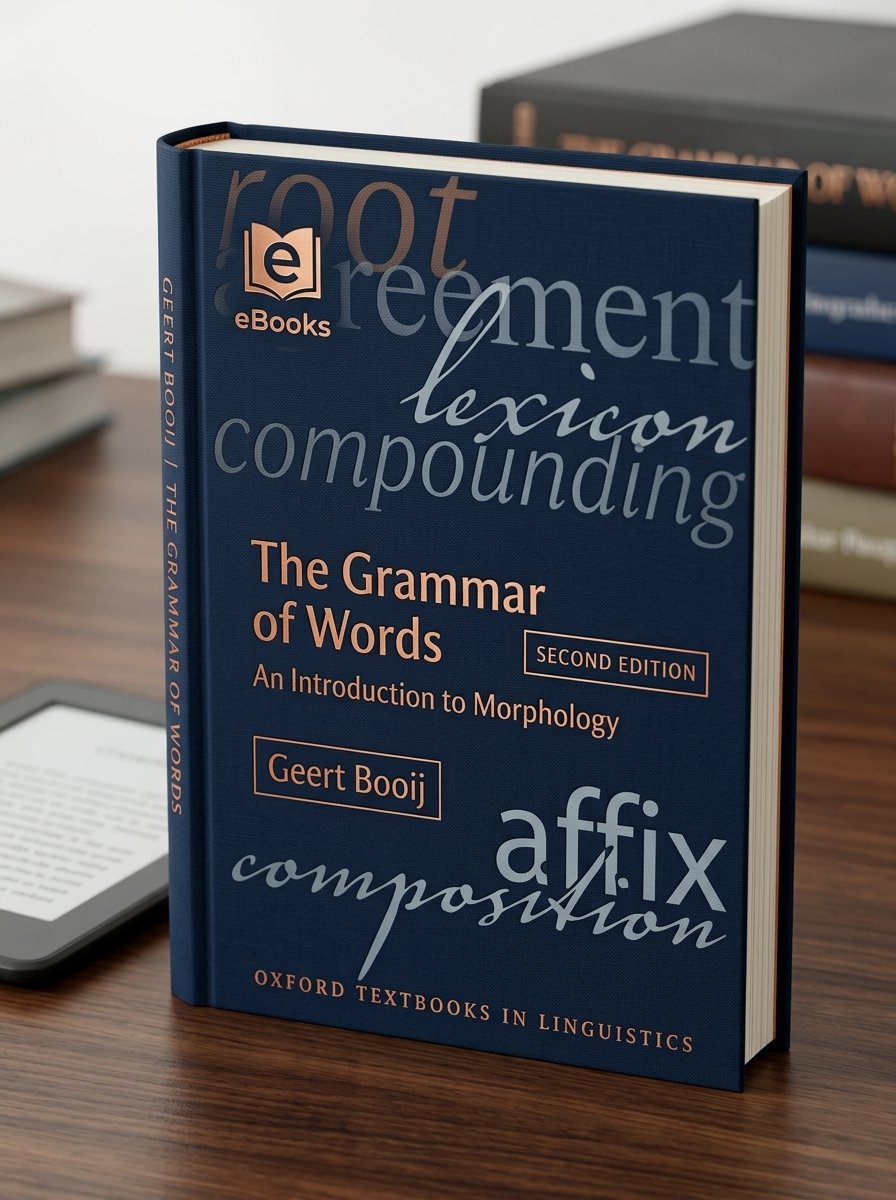
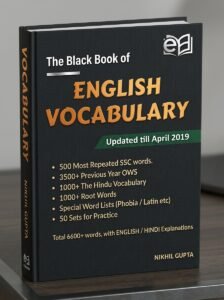
The Grammar of Words is a foundational linguistic resource that explores the internal structure of words—morphology. This article explains how understanding word formation, inflections, and derivations enhances vocabulary acquisition, reading comprehension, and precise language use for learners and educators alike.
1. Understanding Morphemes with The Grammar of Words
The Grammar of Words breaks language down into its smallest meaningful units: morphemes. Free morphemes (like book or run) can stand alone, while bound morphemes (like *un-*, *-ed*, or *-s*) must attach to others. This resource systematically categorizes prefixes, suffixes, infixes, and roots across multiple languages, with English as the primary focus. Each chapter includes word trees and segmentation exercises—e.g., unhappiness → *un-* + happy + -ness. By learning to spot these building blocks, students decode unfamiliar vocabulary without a dictionary. For teachers, this framework simplifies explaining spelling changes (happy → happily) and irregular plurals (child → children). Mastering morphemes transforms guessing into systematic analysis, accelerating reading speed and spelling accuracy.
2. Inflectional Morphology: How Words Change Grammatically
The Grammar of Words dedicates significant coverage to inflection—the modification of words to express tense, number, case, or comparison without changing core meaning. English examples include plural *-s* (cat → cats), past tense *-ed* (walk → walked), comparative *-er* (fast → faster), and possessive *-’s* (Ali’s book). The resource contrasts regular patterns with irregular forms (go → went, mouse → mice) using clear tables and historical notes. For language learners, inflection errors (e.g., two sheeps or more better) are among the most common. Practice drills and error-correction exercises train automatic, correct usage. Understanding inflectional morphology also aids second-language acquisition by revealing universal patterns—once you grasp how English marks past tense, you can better learn past markers in German, Spanish, or Arabic.
3. Derivational Morphology: Building New Words and Families
Unlike inflection, derivation creates entirely new words, often changing part of speech. The Grammar of Words explains how adding derivational affixes produces word families: friend (noun) → friendly (adjective) → friendliness (noun) → unfriendly (adjective). Common English derivational patterns include -ment (govern → government), -tion (inform → information), *re-* (write → rewrite), and -less (hope → hopeless). The resource includes frequency lists of productive affixes and exercises in word-formation analysis. For advanced learners and writers, mastering derivation expands expressive range without memorizing isolated vocabulary. Recognizing that unpredictably combines *un-* + predict + -able + *-ly* demystifies long words. This knowledge also improves performance on standardized tests (GRE, SAT) where morphological awareness directly predicts verbal scores.
4. Word Formation Processes Beyond Affixation
The Grammar of Words goes beyond prefixes and suffixes to cover compounding (toothbrush, blackbird), conversion (email as noun → to email as verb), clipping (advertisement → ad), blending (breakfast + lunch → brunch), and backformation (editor → to edit). Each process is illustrated with authentic corpus examples and historical development notes. Exercises challenge learners to identify processes: Is “smog” a blend? Is “blog” clipped or blended? Understanding these mechanisms helps language learners and computational linguists analyze neologisms (new words) and jargon. For content creators, this knowledge supports creative naming (brands, products) and concise writing. The resource also addresses morphological productivity—why some affixes create many new words (-able) while others fossilize (*-th* in warmth). Practical activities invite readers to invent plausible new words using real rules, making grammar creative rather than mechanical.
5. Why The Grammar of Words Is Essential for Educators and Learners
Choosing The Grammar of Words means investing in deep, transferable language knowledge. Traditional vocabulary teaching presents words as isolated items; this resource reveals interconnected systems. For ESL/EFL teachers, the book provides ready-made lesson plans on word families, error analysis, and morphology games. For students of linguistics, it serves as a concise introduction to morphological theory with cross-linguistic data. For advanced English users (writers, editors, test-takers), explicit morphological instruction improves spelling, reading comprehension, and lexical precision. Unlike phrasebooks or frequency lists, this book answers why words behave as they do. Self-assessment quizzes and glossaries of technical terms make it accessible for self-study. Whether preparing for exams, teaching literacy, or simply curious about language architecture, The Grammar of Words delivers lasting value beyond any single vocabulary list.