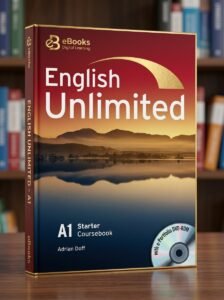
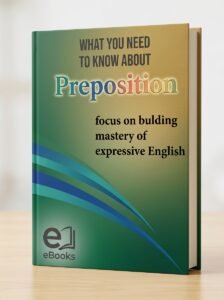
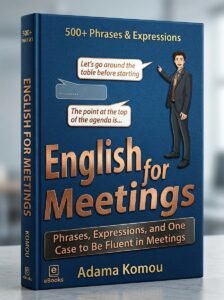
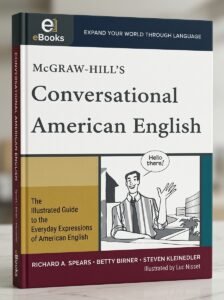
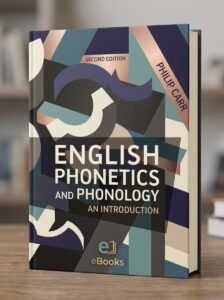
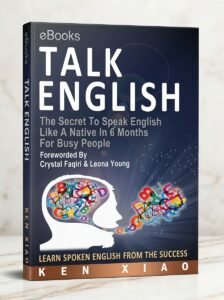
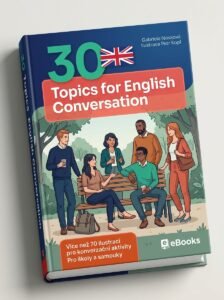
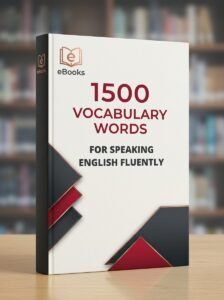
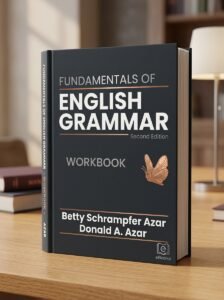
The Book link is given below:English Grammar (1) serves as the foundational building block for clear communication, covering parts of speech, sentence structure, and basic punctuation. Mastering these core rules improves writing, speaking, and reading comprehension for students and professionals alike. This guide breaks down the essentials into five actionable sections, each designed to boost accuracy and confidence. By focusing on high-frequency errors and practical examples, learners can quickly apply these concepts. Below are the five key pillars of English Grammar (1) for effective language mastery.
1. Nouns, Pronouns, and Basic Sentence Structure
English Grammar (1) begins with nouns (person, place, thing) and pronouns (he, she, it, they). Every complete sentence requires a subject and a predicate. For example, “The dog (noun) runs (verb).” Pronouns replace nouns to avoid repetition, like “Maria is kind; she helps others.” Understanding singular vs. plural forms is critical—add “-s” for most nouns but watch exceptions like “child/children.” Proper nouns (names, cities) always start with a capital letter. This foundation prevents fragmented sentences and ensures clarity. Practice by identifying nouns and pronouns in any paragraph you read daily.
2. Verbs, Tenses, and Subject-Verb Agreement
Verbs express actions or states of being. English Grammar (1) focuses on three primary tenses: past, present, and future. For present tense, add “-s” or “-es” for third-person singular (he runs, she watches). A common error is subject-verb disagreement, e.g., “They runs” instead of “They run.” Irregular verbs like “go/went/gone” require memorization. Use past tense for completed actions (“I walked yesterday”) and future with “will” or “going to.” Consistent tense within a sentence is key. Drill with fill-in-the-blank exercises: “She ___ (to be) happy yesterday” → “was.”
3. Adjectives, Adverbs, and Descriptive Precision
Adjectives modify nouns (a red car), while adverbs modify verbs, adjectives, or other adverbs (runs quickly). English Grammar (1) teaches order of adjectives: opinion, size, age, shape, color, origin, material, purpose (a beautiful small old French table). Adverbs often end in “-ly,” but exceptions exist (fast, hard). Avoid overusing very or really; choose stronger words (exhausted instead of very tired). Comparative forms add “-er” or “more” (taller, more beautiful); superlatives use “-est” or “most” (tallest, most beautiful). This layer adds nuance, making writing vivid and professional.
4. Prepositions, Conjunctions, and Connecting Ideas
Prepositions (in, on, at, for, with) show relationships of time, place, or direction. English Grammar (1) clarifies tricky pairs: “at 5 PM” (time), “on Monday” (day), “in July” (month). Conjunctions like “and, but, or, so, because” join clauses to form compound sentences. For example, “I wanted to go, but it rained.” Avoid comma splices—never connect two full sentences with only a comma. Use a conjunction or a semicolon instead. Mastering these connectors improves sentence flow and logical structure. Practice by rewriting run-on sentences from your own writing.
5. Punctuation, Capitalization, and Common Fixes
English Grammar (1) finishes with mechanics. Every sentence starts with a capital letter and ends with a period (.), question mark (?), or exclamation point (!). Commas list items (“apples, bananas, and grapes”) or follow introductory phrases (“After dinner, we left”). Apostrophes show possession (Felix’s book) or contractions (don’t = do not). Common errors: its vs. it’s (possessive vs. “it is”), your vs. you’re, and there/their/they’re. Quotation marks enclose speech. A final proofread for these five fixes instantly raises professionalism. Use online tools like Grammarly, but learn the rules first.