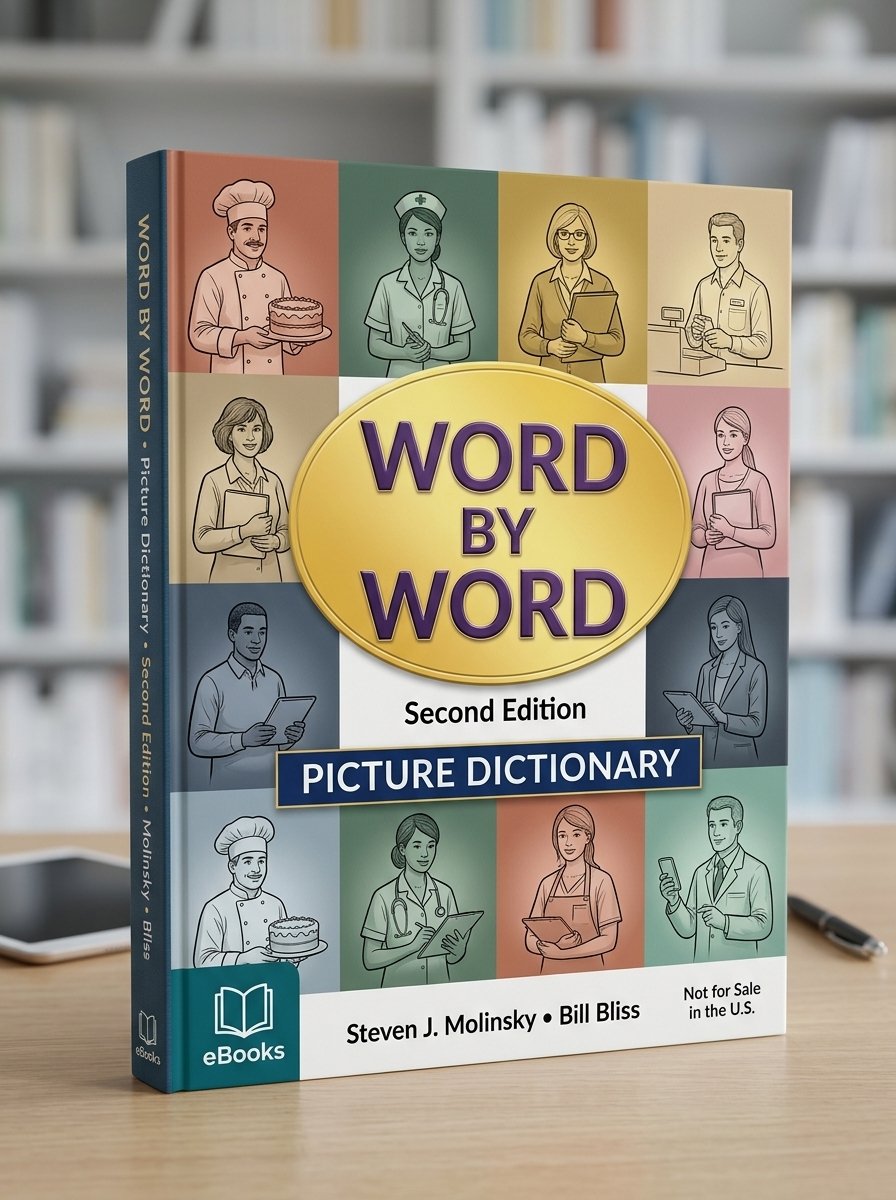
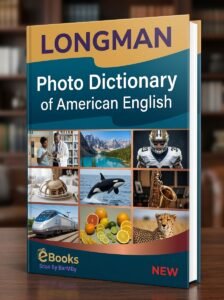
The Book link is given below:Words stick when you see them, not just read them. Word by Word – Picture Dictionary – Second Edition transforms vocabulary learning through visual context—each word paired with a clear, memorable image. This isn’t a dusty dictionary. It’s a bilingual-friendly, theme-organized toolkit for English learners at any level. From everyday objects to workplace terms, you’ll learn faster because your brain thinks in pictures. Below, five strategies to master 4,000+ words using this visual method—starting today.
1. Learn by Theme, Not Alphabet
Word by Word – Picture Dictionary rejects alphabetical lists. Instead, it organizes vocabulary into 150+ thematic units: “In the Supermarket,” “At the Doctor’s Office,” “Describing People,” and “Job Interviews.” Why themes? Your brain stores related words together—learning “apple, banana, milk, bread” as a grocery unit builds stronger neural connections than scattered memorization. Spend 15 minutes daily on one theme. Study the picture first. Name what you see. Then read the matching words. The visual anchor gives you two memory pathways: image and text. Weeks later, when you enter a supermarket, the entire unit activates automatically. That’s theme-based power.
2. Cover the Labels for Active Recall
Passive looking teaches nothing. Word by Word – Picture Dictionary becomes powerful when you use active recall. Cover the word labels with your hand or a sticky note. Look only at the picture. Try to name every item. Then uncover to check. Research shows that attempting to recall before seeing the answer triples retention compared to simple rereading. For each theme, do three passes: cover-and-guess, then write the words you missed, then speak them aloud. This 5-minute drill turns passive viewing into active mastery. The dictionary stops being a reference book and becomes a daily brain workout. Your vocabulary won’t just grow—it will stick.
3. Use the Bilingual Glossaries for Your Language
Word by Word – Picture Dictionary – Second Edition includes glossaries in twelve languages: Spanish, Chinese, Korean, Arabic, Russian, Vietnamese, and more. Don’t ignore this section. After studying a theme in English, flip to your native language glossary. Say the English word, then your language’s equivalent, then the English word again. This creates a three-way bridge: image → English → native language. Research on bilingual learners shows that cross-referencing strengthens both languages simultaneously. You’re not abandoning your first language—you’re using it as a scaffold to climb higher in English. The glossary isn’t an appendix. It’s your secret acceleration tool.
4. Practice the Conversation Models Aloud
Each unit in Word by Word ends with a short conversation model using the unit’s vocabulary. Most learners skip this. Don’t. These dialogues teach you how words live in real sentences. For the “Restaurant” unit, you’ll practice: “I’d like the grilled chicken. What comes with it?” Say these lines aloud five times. Then change one word: “I’d like the fish sandwich. What comes with it?” Then role-play both sides alone. Your mouth needs muscle memory just like your eyes need picture memory. By speaking every dialogue, you’re not learning isolated vocabulary. You’re programming yourself for actual conversations. When the waiter asks, your answer will be automatic.
5. Review with the End-of-Unit Exercises
Word by Word – Picture Dictionary – Second Edition includes fill-in-the-blank, matching, and writing exercises after every unit. These are not optional worksheets. They are diagnostic tools. Complete them without looking back at the pictures. Every wrong answer reveals a gap. Go back, re-study that specific word or phrase, then redo the exercise. This is called “targeted remediation”—fixing only what you missed, not re-studying everything. Complete one unit’s exercises each day as your final checkpoint. By the end of the book, you’ll have identified and eliminated hundreds of weak spots. The second edition’s expanded exercises turn a picture dictionary into a complete learning system. Open to Unit One. Cover the labels. Begin.